

NISHATI – Building Capacities in Water, Renewable Energy and Agriculture to Enhance Local Resilience to Climate Change in Africa is a multi-country, multi-institutional initiative aimed at strengthening higher education systems and community capacity to respond to climate change challenges in Africa. The project focuses on three interlinked thematic areas: eco-agriculture, water management, and green energy for agriculture.
The project is implemented through a strong consortium of European and African universities and private-sector partners, led by Sapienza University of Rome, and involving partner universities in Uganda (Kabale University and Gulu University), Rwanda (Catholic University of Rwanda and the University of Technology and Arts of Byumba), and Tanzania, including Sokoine University of Agriculture and Mzumbe University, alongside industry partners from Italy. Through this collaboration, NISHATI bridges academic knowledge, applied skills, and community needs, ensuring that climate-smart solutions are scientifically sound, context-specific, and practically applicable.
Transformative Pedagogy for Climate-Smart Skills Development
At its core, NISHATI seeks to transform teaching, learning, and applied training in climate-related sectors. The project supports the revision of existing curricula and the development of new interdisciplinary courses, while introducing innovative pedagogical approaches based on Theory–Practice–Training of Trainers (ToT). These approaches strengthen competence-based education, enhance academic quality assurance, and promote inclusion and sustainability strategies within partner universities.
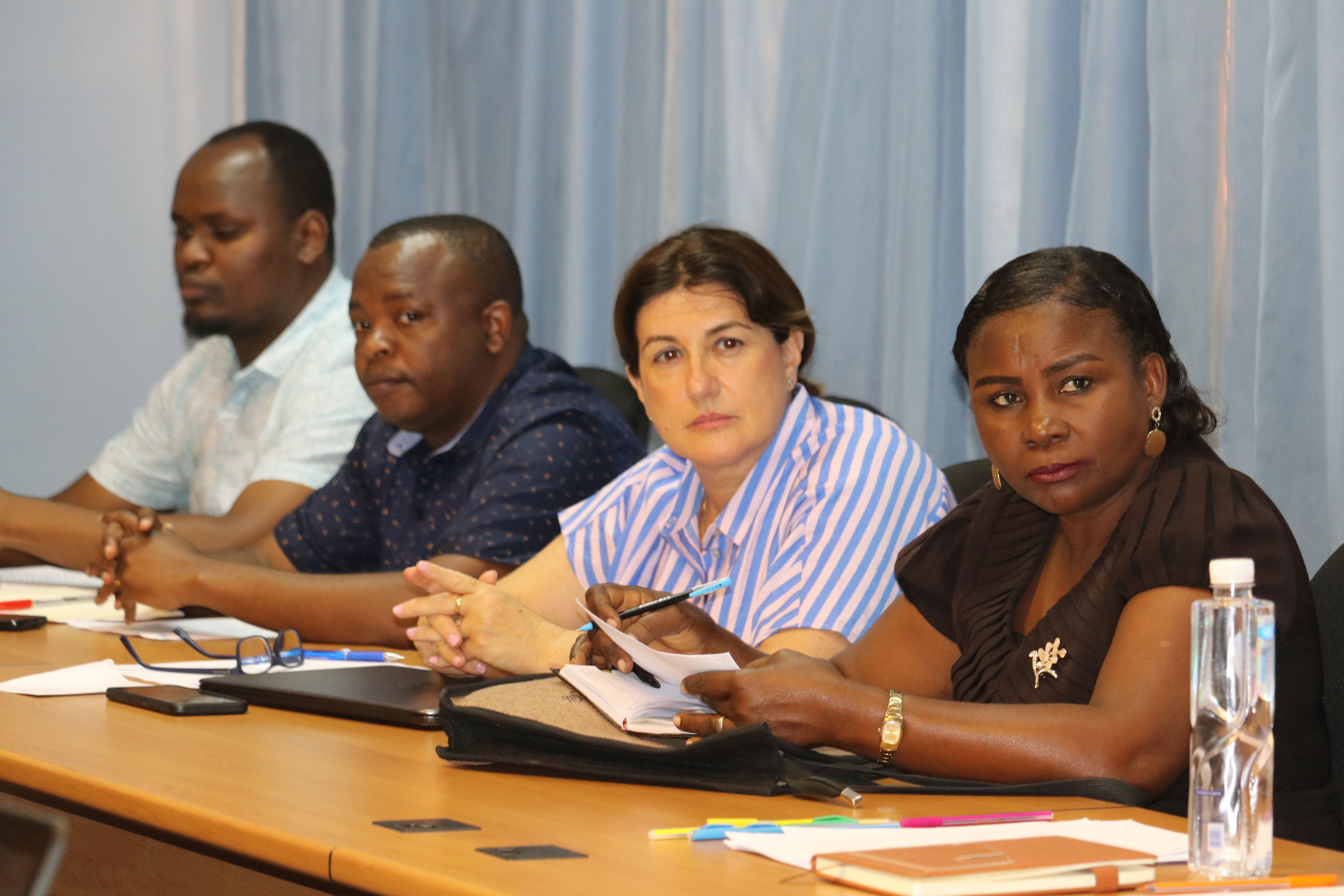
By embedding practical training within academic programmes, NISHATI ensures that students and trainers acquire hands-on, problem-solving skills that respond directly to climate-related challenges in agriculture, water management, and renewable energy systems. The pedagogical transformation promoted by the project aligns education outcomes with labour-market needs and societal demands, contributing to the development of a skilled workforce capable of supporting climate resilience and sustainable development.
Applied Training, Innovation and Community Engagement
The project further establishes practical laboratories and community-based open labs, where students, trainers, extension personnel, and local stakeholders engage directly with real-world challenges in water management, sustainable agriculture, and renewable energy for agriculture. These facilities provide platforms for applied learning, testing of climate-smart technologies, and co-creation of solutions with communities.
Through training-of-trainers programmes, business skills laboratories, and structured engagement with industry, NISHATI ensures that knowledge generated within universities is transferable, scalable, and aligned with labour-market and community needs. This integrated approach strengthens university–industry–community linkages and supports innovation, entrepreneurship, and local economic development.
Expected Results and Long-Term Impact
Key project targets include the delivery of new accredited courses, the organisation of specialised training weeks on water management, agriculture–environmental interactions, hydropower, and solar energy, and the establishment of at least six innovative laboratories across partner countries. These activities contribute to strengthening graduate employability, institutional capacity, and innovation ecosystems in climate-sensitive sectors.
Overall, NISHATI aims to produce industry- and community-ready graduates capable of designing, managing, and implementing sustainable solutions in agriculture, water, and renewable energy. In doing so, the project contributes to long-term climate resilience, green development, and sustainable livelihoods in Africa, while reinforcing the role of higher education institutions as drivers of climate-smart transformation.