Sokoine University of Agriculture (SUA) undertook a study visit to Zimbabwe from 23rd to 26th March 2026, engaging with the University of Zimbabwe (UZ) and Bindura University of Science Education (BUSE) to learn from their experiences in innovation, industrialisation, and university–industry linkages. The visit was supported by the Tanzania Commission for Universities (TCU) through the Higher Education for Economic Transformation (HEET) Project and forms part of SUA’s ongoing efforts to strengthen connections between training, research, innovation, and practical application. SUA was represented by the Deputy Vice Chancellor (Academic, Research and Consultancy), Prof. Maulid Mwatawala.
At the University of Zimbabwe, the visit was hosted by Prof. Florence Mtambanengwe, Executive Director for Research, Innovation and Industrialisation, on behalf of the Vice Chancellor, Prof. Dr. Paul Mapfumo. Engagements with the Faculty of Agriculture, Environment and Food Systems and the Innovation Hub provided an opportunity to observe how the University brings together research, innovation, and production within the Education 5.0 framework. The programme included visits to the Innovation Hub, Incubation Centre, and Industrial Park, where activities move from idea development and prototyping to production and market-oriented outputs. Within the Industrial Park, several operational units were observed, including agro-processing facilities, poultry systems, and VN Limited, a limited liability company involved in soybean processing (oil production) and confectionery products, alongside a supermarket. These activities are organised along a value chain that links production, processing, and sales. Additional developments, including a quinary hospital, a dental facility, and a planned Research and Development Centre, reflect continued investment in facilities that support both training and service delivery. The visit also included a tour of the University Library, which offers modern learning spaces, digital resources, and facilities that cater for different learning needs.

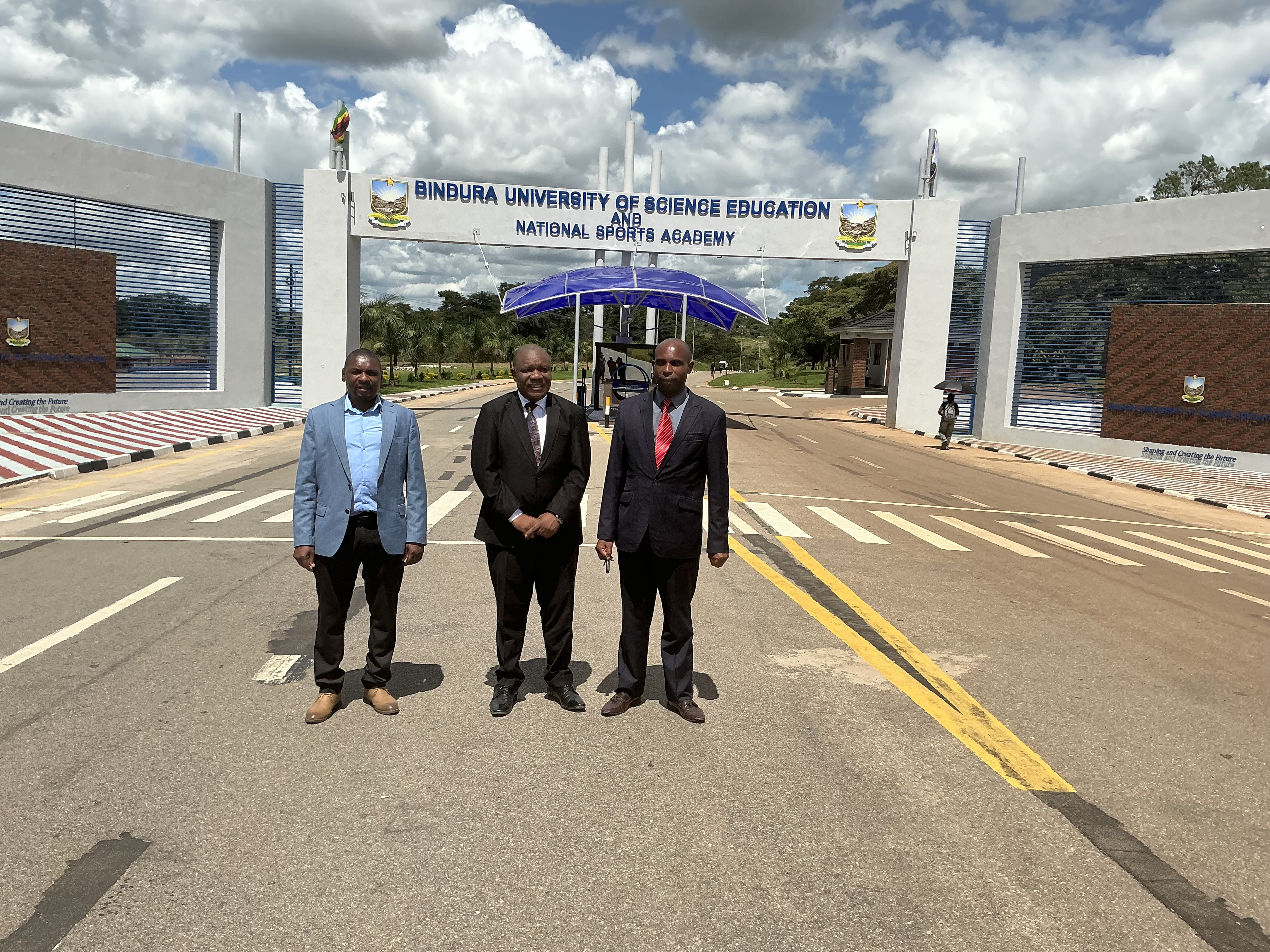
At Bindura University of Science Education, the visit included a courtesy call to the Vice Chancellor, Prof. Eddie Mwenje, and provided further exposure to how the University is implementing Education 5.0 in practice. Facilities visited included the Innovation Hub, Industrial Park, agro-processing units, and specialized areas such as the Goat Genetic Centre, which was identified as a potential area for collaboration. The Industrial Park hosts enterprises such as Palpo Technologies, involved in the assembly of mobile phones, laptops, and television sets, as well as emerging agro-processing activities including food products and juice production. The University’s production systems include cattle, goat, and poultry units, which are used both for training and practical learning.
A meeting with academic staff at BUSE provided an opportunity to present SUA’s academic programmes, research activities, and ongoing reforms. The discussion created space for exchange of ideas and led to agreement on areas of collaboration, culminating in the development of a Memorandum of Understanding (MoU), which was signed by the Vice Chancellor of BUSE, Prof. Eddie Mwenje, and shared with SUA for counter-signing.
In addition, Prof. Mwatawala paid a courtesy call to the Embassy of Tanzania in Harare, where he held a brief discussion with Ambassador Suzan Kaganda, further strengthening links beyond the academic institutions.
Across both universities, it was clear that activities are organised in a way that connects research, innovation, training, and production. Innovation spaces such as hubs and incubation centres are closely linked with production units, including farms and industrial facilities, allowing ideas to move into practical use while also supporting student learning. There is also deliberate coordination of facilities and activities, reducing duplication and bringing different functions together within shared platforms.
The visit provided a practical perspective on how universities can connect knowledge generation with application and enterprise development, while maintaining relevance to national and regional priorities.