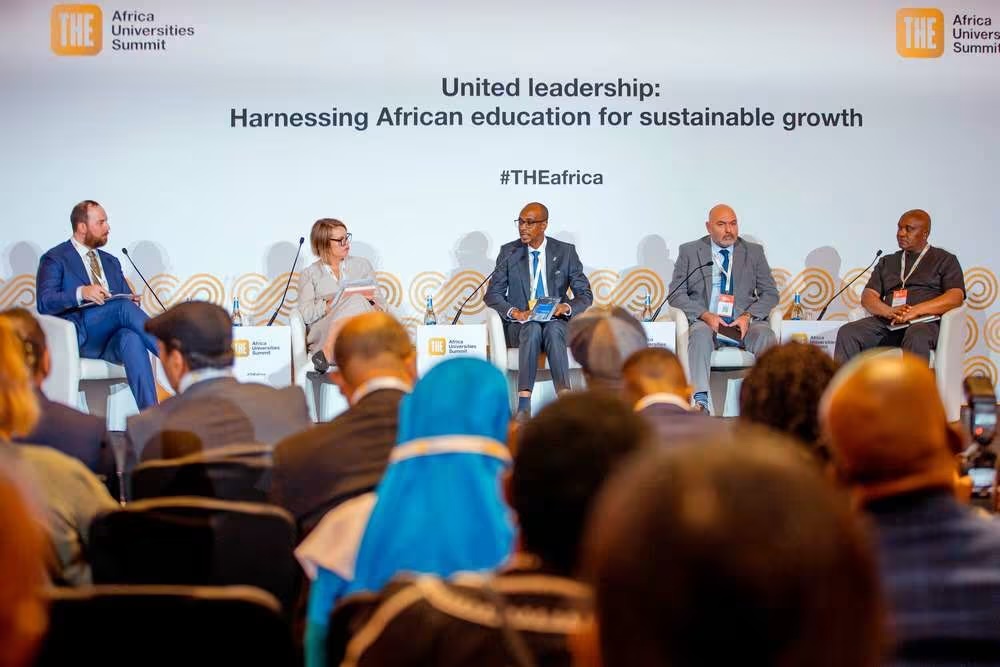
Sokoine University of Agriculture (SUA) participated in the African Universities Forum held at the Kenyatta International Conference Centre (KICC), Nairobi, from 30th to 31st March 2026. The forum, organised by Times Higher Education (THE), brought together universities, policymakers, development partners, and higher education stakeholders from across Africa to share experiences and discuss emerging issues shaping higher education, research, innovation, and collaboration on the continent. The visit was supported by the Higher Education for Economic Transformation (HEET) Project. SUA was represented by the Deputy Vice Chancellor (Academic, Research and Consultancy), Prof. Maulid Mwatawala, who participated in the sessions and engagements of the forum.
Discussions at the forum highlighted the increasing importance of strategic partnerships in strengthening institutional capacity, enhancing visibility, and supporting talent development. Particular emphasis was placed on partnerships grounded in equity, reciprocity, and trust, as well as the need to move toward more structured and mutually beneficial collaborations. The forum also emphasized the importance of institutionalizing talent development frameworks, ensuring inclusive access to opportunities, and preparing graduates as global citizens capable of responding to both local and global challenges.
The role of universities in addressing societal challenges through innovation and entrepreneurship featured prominently in the discussions. Participants reflected on the need to align research more closely with societal needs, while also re-examining the balance between traditional academic outputs and innovation-driven outputs, including products, technologies, and enterprises. This includes the need to review incentive and reward systems to better support impact-oriented research and application.
The forum further addressed issues related to research collaboration and equity, including the importance of co-creation of knowledge, fair access to resources, and the need to strengthen the role of African institutions in shaping research agendas. Discussions also touched on broader concerns related to funding models, epistemological considerations, and the importance of ensuring that research partnerships are inclusive, context-relevant, and responsive to historical and structural imbalances.
In addition, the role of innovation ecosystems, including innovation hubs and science and technology parks, was highlighted as critical in supporting collaboration, enterprise development, and the translation of research into practical applications. The need to reduce fragmentation within universities, strengthen coordination across units, and align institutional activities with national and regional development priorities was emphasized. Engagement with the private sector was also identified as an important component in advancing innovation and commercialization.
The forum also highlighted the growing importance of data and analytics in supporting institutional planning, performance monitoring, and strategic decision-making. Universities are increasingly expected to adopt more holistic approaches to performance assessment, incorporating teaching, research, industry engagement, and societal impact, supported by emerging tools that provide real-time insights for institutional leaders.
The insights gained from the forum are directly relevant to SUA’s ongoing transformation agenda. In particular, they reinforce the need to strengthen ecosystem-based approaches that integrate research, innovation, outreach, and industrialisation; enhance strategic partnerships grounded in equity and mutual benefit; expand innovation and incubation platforms; promote competence-based and entrepreneurship-oriented training; strengthen data-informed planning and decision-making; and reduce fragmentation through improved institutional coordination.
Overall, participation in the African Universities Forum provided an important opportunity for SUA to engage with continental perspectives, benchmark emerging practices, and identify strategic directions that can further strengthen its contribution to national development and its positioning within regional and global higher education systems.